Mostrar mensagens com a etiqueta Lesbian. Mostrar todas as mensagens

terça-feira, 3 de novembro de 2009

Sleeping Beauty ,Indeed & Other Lesbian Fairy Tales edited by Joselle Vanderhooft


Sleeping Beauty, Indeed & Other Lesbian Fairy Tales isn't a new anthology but has recently been re-released in paperback form by Lethe Press. My initial impression is that with only ten stories and under two hundred pages, this is a very thin book. However, that judgment was premature. Editor Joselle Vanderhooft aims for quality over quantity and that's not an empty boast. It's not often that I run across an anthology where each story grabs my attention and there's honestly no bad story to be found...

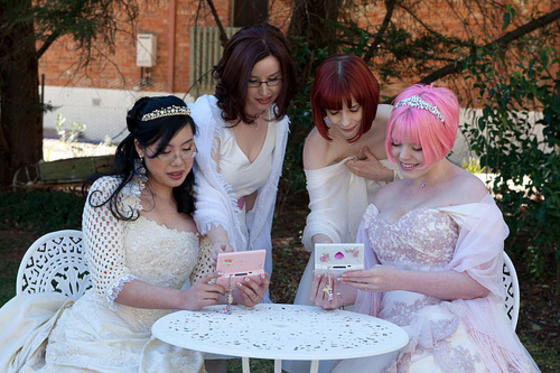
Anli & Laura's Lesbian Gamer Geek Wedding


We wanted a ceremony that reflected our geeky, romantic, pink aesthetic, while at the same time being profound and meaningful. Our ceremony was themed around the video game Portal and the anime series Revolutionary Girl Utena.

Via:

Boing Boing

segunda-feira, 14 de setembro de 2009

Lesbians united: Facing down homophobic bullies

Stonewall's 'Some People Are Gay. Get Over It!' campaign is tackling bigotry in our schools

By Rachel Shields


Some of the UK's most prominent female writers, comedians and presenters, and one MP, are chatting over coffee and biscuits in a smart London bar. The topic of conversation isn't the latest play at the National, the current publishing sensation, or a piece of controversial legislation. No, these women are talking about sexual abuse; about insults scrawled on toilet walls; hate-filled letters published in newspapers; name-calling in the street: in short, about the harassment they have suffered as a result of their sexuality.

Like an estimated 1.8 million women in Britain, Stella Duffy, Rhona Cameron, Amy Lamé, Angela Eagle and Sarah Waters are lesbian or bisexual, and as some of the country's few prominent lesbians, the are fronting the gay rights group Stonewall's latest campaign, entitled: "Some People Are Gay. Get Over It!".

Timed to coincide with the start of the new academic year, the simple slogan was the idea of school pupils and is intended to highlight the problem of homophobic bullying in schools.

Related articles

Editor-At-Large: After Turing, the shameful abuse of gays goes on

"A taster campaign of the billboards saw some defaced with homophobic graffiti – reminding us that prejudice is still very much alive in Britain today," said Stonewall's Ben Summerskill.

This sentiment is backed by recent research by YouGov, which revealed that one in five gay people in the UK has been a victim of hate crime in the past three years. These statistics indicate that, while gay rights in the UK have improved dramatically in the 20 years since Stonewall was founded – decades in which Section 28, the controversial legislation that banned teachers from talking about homosexuality in schools, has been repealed, civil partnerships have been introduced, and the age of consent has been equalised – the struggle to eradicate homophobia from the streets and schools of Britain may not be over yet.

Leading the fight against homophobia...

Stella Duffy

Writer, 46

"I was brought up in a small town in New Zealand, where there wasn't a lot of gay identity being paraded. I would have felt a lot less lonely if there had been. There are about 12 'out' lesbians in the public eye. I think it is less socially acceptable to be a lesbian. In the world of entertainment we've had pop stars like Elton John, Boy George and Will Young as cultural icons, and that helps. Gay men didn't have the problem of invisibility; they had a law against them that gave them something solid to join and unite against. We are still living in a culture that wants women to get married and have babies. They don't know where to put us, especially lesbians who look like me. I haven't been bullied, but I've suffered everything from sexual harassment to other, minor inappropriateness. I went to another civil partnership last week. If these are so great, then we should scrap marriage and everyone should have them. I've been with my partner for 15 years; we had a civil partnership three days after it was legal, but I want to get married."

Angela Eagle

MP, 48

"We fought to equalise the age of consent, to repeal Section 28, but there is still more to do in terms of legislation. We need a law dealing with incitement to homophobic hatred, like the law against incitement to racial hatred. If something leads to violence against people in a certain group, then that shouldn't be tolerated. There is a group in Parliament who'll be hostile to legislative change around the issue of gay rights; around 70 per cent of the Tory Party. You need a progressive majority of MPs to move on. I'm the only lesbian in Parliament. The only 'role model' in terms of sexuality in politics I had is the MP Maureen Colquhoun, outed in a disgusting way by Nigel Dempster in the mid-1970s. She lost her seat at the next election. I got to the stage where I was willing to risk losing my seat if that's what happened. I didn't know what to expect, but luckily I was supported by my then boss, John Prescott. Tony Blair was also extremely supportive. My constituents were fantastic."

Amy Lamé

TV presenter, 38

"I came out in my final year of university, and the bullying was shocking. It was a systematic hate campaign; from horrible letters printed in the school paper to graffiti on toilet walls. My academic work suffered as a result of it. I grew up in a small town in New Jersey – a cross between Essex and Liverpool – an hour out of New York, but it might as well have been a world away. I had no lesbian role models when I was young, and it wasn't until I started reading feminist books as a teenager that I found a channel for my feelings. I know what it is like to be isolated and feel as if you are the only one. I did a series called My Big Gay Prom with gay teenagers, which is one of the things I'm most proud of doing. Things have changed dramatically because people like Stonewall have worked hard to change laws, perceptions and mindsets. Rights and freedoms in the United States now pale in comparison to the UK. I've been in the UK for 17 years and have been with my partner for 15 years, but we couldn't go to live in the US because our civil partnership isn't recognised there."

Rhona Cameron

Comedian and author, 43

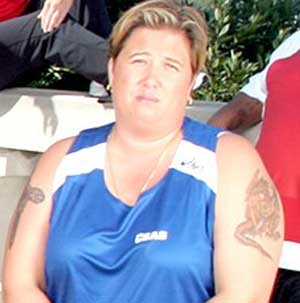
"Let's remind ourselves of a few things that have happened in the past year: in Liverpool a young boy was killed for being gay; elsewhere in the UK a man watched his partner stabbed to death and called faggot; and in South Africa a promising young footballer was gang-raped and killed for being a lesbian. The idea that these things aren't going on is just wrong. Statistically, homophobic bullying is still a big problem in schools, and a big factor in teen suicide. I was bullied for a time at school. I lived in fear of people turning up at my house and shouting stuff. Events that happen at school can scar you. I hadn't heard of any lesbians when I was at school; I used to look up 'lesbian' in the dictionary as I didn't know what it meant. It is disappointing that there are so few athletes out. If you are at a rough comprehensive, you're not going to know about some novelist, but you'll know about sports stars and pop stars. There are at least six gay Premier League footballers who are closeted; some of the female sporting legends of all time were, and are, gay."

Sarah Waters

Writer, 43

"Lesbianism is a part of life, but young people who are gay can feel isolated and like freaks. I think it is both easier and harder for young people now. Because of the greater visibility of gay people, they are also more of a target: there is a climate of homophobia that wasn't the case in my day. I don't like the way that the word 'gay' is used as an insult. I use the word 'dyke', though. I feel we have reclaimed it. Offence comes from the way words are used, not the words themselves. We're more protected than ever in law, but now more cultural and social changes are needed. We see far more gay men in the public eye than women. This is partly because gay culture on the whole is more flamboyant and glamorous. For me, as a writer, there are quite a lot of lesbians around. Literature feels like a lesbian-friendly place. I doubt young lesbians look up to people like me, more to people like Beth Ditto; it is healthy and exciting that there are role models like her."

Lesbians united: Facing down homophobic bullies

quarta-feira, 12 de agosto de 2009

What is "Transgender"?

What Is "Transgender"?


DVDs of this video are now available at

Gender Identity Project (GIP)

Transgender Basics is a 20 minute educational film on the concepts of gender and transgender people. Two providers from the Center's Gender Identity Project (GIP) discuss basic concepts of gender, sexual orientation, identity and gender roles. Three transgender community members share their personal experiences of being trans and genderqueer. The film targets service providers and others working with the LGBT community, but it also provides a fascinating glimpse into gender and identity for the general public. "Our culture likes to make things simple, and gender isn't." Carrie Davis, Transgender Community Organizer, in Transgender Basics. For more information contact the Gender Identity Project at 212-620-7310 or at

Gender Identity Project (GIP)

Far Out

Far Out: UK’s first online lesbian drama now in production


Inner Sanctum has taken the wraps off its debut project – a fast-paced series featuring the lives, loves and dramas of a group of gay women.

Far Out is a tell-it-how-it-is window on the lives of a group of friends living in London. Already being hailed as the lesbian Queer As Folk, and drawing comparisons with This Life, Far Out is the creation of new talent Faye Hughes.

The project is the realisation of more than four years’ hard work and determination for Hughes. After touting her script – unsuccessfully – to a number of broadcasters including the BBC’s Writers Room, she has raised backing to launch the show online.

She says: “The media is so out of touch in the way it portrays gay women. Lesbians are either unattractive dykes, ball-breaking shrews or lentil-eating hippies with hairy armpits – and we’re all gagging to ‘convert’ straight women. Thankfully you can no longer portray gay men in this way – but lesbians still seem to be fair game”.

“With Far Out, I wanted to show what life for gay women is really like. That we have real and valid relationships, that we can be butch dykes or girly girls or anything in between, that we have kids, responsible jobs, families, ambitions and aspirations. We can honestly say that we are telling our story from experience, this isn’t a group of men sat in a board room making a series for money”

And Far Out is far from being a worthy endeavour. It’s a funny, gripping show that will take viewers on an emotional, sexy, roller coaster of a ride through contemporary lesbian life.

Belief in the project and the strength of the script is such that crew & cast are working for free. Designer, Anna Thomas has come straight from the Art Department of Sam Taylor Woods ‘Nowhere Boy’ and is booking up Soho locations for the filming. Enclave, on Brewer Street has been secured.
Casting is now taking place (DJ Cupcake and Jane CZ from DIVA are set to take cameo roles), filming will happen in the summer and a teaser will be launched at Pride.

The pilot episode will be released online following a screening in September.

Far Out

sábado, 11 de julho de 2009

She's a Boy I Knew


wwwartflickcom, youtube

'She's a Boy I Knew' is a comic, heartbreaking, and uplifting autobiography, in which filmmaker Gwen Haworth documents her gender transition through the voices of her anxious but loving family, best friend & wife. The film refreshingly looks at a family whose bonds strengthen as they re-examine their preconceptions of gender and sexuality.

The film is currently on the film festival circuit. Check for a screening in your area on the film's website at

She's a Boy I Knew

segunda-feira, 22 de junho de 2009

Nanna Grundfeltd


"Top Model" names its first lesbian winner--Nanna Grundfeltd

Nanna Grundfeltd is the first openly gay contestant to have won the title of "Top Model" in Searching For Finland's Top Model, the Finnish version of "America's Next Top Model."

The 25-year-old Finnish model is the first lesbian contestant to have taken the top prize in over 30 versions of the hit show around the world.

During the competition, Nanna (and the other contestants) were challenged to paint a word on their clothing which best described them. Nanna chose the word "homo," which is Finnish for "gay."

After that episode, Nanna responded: ""I'm so proud to be gay. I'm so lucky: I'm a woman and like women too! There's nothing better. I thought at first I'd put something more than just "Homo" on the hoodie, like "homo — who cares" but ... It was a strong word and that was needed."

For more info:

Finland's Top Model

domingo, 14 de junho de 2009

Cher's son to undergo SRS


Cher's child is in the process of having a sex change, it has been revealed.

Chaz Bono, who lived as a lesbian called Chastity for nearly 20 years, is to undergo gender reassignment.

His publicist Howard Bragman said last night: "He is proud of his decision and grateful for the support and respect that has already been shown by loved ones. It is Chaz's hope that his choice to transition will open the hearts and minds of the public regarding this issue, just as his coming out did nearly 20 years ago."

LGBT organisations such as GLAAD have already given their support.

Bono, 40, is Cher's only child with late husband Sonny Bono. He is a gay rights activist but also works as a musician, writer and actor. He wrote about his experience of coming out to his mother in the memoir Family Outing.

Bragman said he has already begun hormone therapy but it is not yet known whether he will be having gender reassignment surgery.

De pinknews


"
Walking in Memphis
Walking with my feet ten feet off of Beale
Walking in Memphis
Do I really feel the way I feel"

sexta-feira, 5 de junho de 2009

Two-Spirit

Two-Spirit (also two spirit or twospirit) people are Native Americans who fulfill one of many mixed gender roles found traditionally among many Native Americans and Canadian First Nations indigenous groups. Traditionally the roles included wearing the clothing and performing the work of both male and female genders. The term usually implies a masculine spirit and a feminine spirit living in the same body and was coined by contemporary gay, lesbian, bisexual, and transgender Native Americans to describe themselves and the traditional roles they are reclaiming. There are many indigenous terms for these individuals in the various Native American languages as "what scholars generically refer to as 'Native American gender diversity' was a fundamental institution among most tribal peoples"[1].

As of 1991, male and female bodied Two-Spirit people have been "documented in over 130 tribes, in every region of North America, among every type of native culture".[2]


Terminology

The older term berdache is a generic term used primarily by anthropologists, and is frequently rejected as inappropriate and offensive by Native Americans. This may be largely due to its pejorative etymology as it is a loan from French bardache via Spanish bardaxa or bardaje/bardaja via Italian bardasso or berdasia via Arabic bardaj meaning "kept boy; male prostitute, catamite" from Persian bardaj < Middle Persian vartak < Old Iranian *varta-, cognate to Avestan varəta- "seized, prisoner," formed from an Indo-European root *welə- meaning "to strike, wound" (which is seen in English as vulnerable). It has widely been replaced with two-spirit.[3][4][5]

Two-spirit originated in Winnipeg, Canada in 1990 during the third annual intertribal Native American/First Nations gay and lesbian conference. It is a calque of the Ojibwa phrase niizh manidoowag (two spirits). It was chosen to distance Native/First Nations people from non-natives as well as from the words berdache and gay.[6]


Definition and historic societal role

These individuals were sometimes viewed in certain tribes as having two spirits occupying one body. Their dress is usually a mixture of traditionally male and traditionally female articles. They have distinct gender and social roles in their tribes.

Two-spirited individuals perform specific social functions in their communities. In some tribes male-bodied two-spirits held specific active roles which, varying by tribe, may include:

healers or medicine persons
gravediggers, undertakers, handling and burying of the deceased (Bankalachi, Mono, Yokuts)
burial festivities (Achomawai, Atsugewi, Bankalachi, Mono, Tübatulabal, Yokuts, Oglala Lakota, Timucua)
conduct mourning rites (Yokuts)
conduct sexual rites
conveyers of oral traditions and songs (Yuki)
nurses during war expeditions (Cheyenne, Achomawi, Oglala Lakota, Huchnom, Karankawa, Timucua)
foretold the future (Winnebago, Oglala Lakota)
conferred lucky names on children or adults (Oglala Lakota, Papago)
weaving and basketry (Zuni, Navajo, Papago, Klamath, Kato, Lassik, Pomo, Yuki)
made pottery (Zuni, Navajo, Papago)
made beadwork and quillwork (Oglala Lakota, Ponca)
matchmaking (Cheyenne, Omaha, Oglala Lakota)
mediator between lovers or married persons (Navajo)
made feather regalia for dances (Maidu)
special skills in games of chance
ceremonial roles during and leading scalp-dances (Cheyenne)
fulfilled special functions in connection with the Sun Dance (Crow, Hidatsa, Oglala Lakota)

In some tribes female-bodied two-spirits typically took on roles such as:

chief, council
trader
hunter, trapper, fisher
warrior, raider
guides
peace missions
vision quests, prophets
medicine persons
Some examples of two-spirited people in history include accounts by Spanish conquistadors who spotted a two-spirited individual(s) in almost every village they entered in Central America. There are descriptions of two-spirited individuals having strong mystical powers. In one account, raiding soldiers of a rival tribe began to attack a group of foraging women. When they perceived that one of the women, the one that did not run away, was a two-spirit, they halted their attack and retreated after the two-spirit countered them with a stick, determining that the two-spirit would have great power which they would not be able to overcome.

Native people have often been perceived as "warriors," and with the acknowledgment of two-spirit people, that romanticized identity becomes broken. In order to justify this new "Indian" identity many explained it away as a “form of social failure, women-men are seen as individuals who are not in a position to adapt themselves to the masculine role prescribed by their culture” (Lang, 28). Lang goes on to suggest that two-spirit people lost masculine power socially, so they took on female social roles to climb back up the social ladder within the tribe.

Cross dressing of two-spirit people was not always an indicator of cross acting (taking on other gender roles and social status within the tribe). Lang explains “the mere fact that a male wears women’s clothing does not say something about his role behavior, his gender status, or even his choice of partner…” (62). Often within tribes, a child’s gender was decided by depending on either their inclination toward either masculine or feminine activities, or their intersex status. Puberty was about the time by which clothing choices were made to physically display their gender choice.

Two-spirit people, specifically male-bodied (biologically male, gender female), could go to war and have access to male activities such as sweat lodges.[7] However, they also took on female roles such as cooking and other domestic responsibilities. Today’s societal standards look down upon feminine males, and this perception of that identity has trickled into Native society. The acculturation of these attitudes has created a sense of shame towards two-spirit males who live or dress as females and there is no longer a wish to understand the dual lifestyle they possess.

Two-spirits might have relationships with people of either sex.[8] Female-bodied two-spirits usually had sexual relations or marriages with only females.[9] In the Lakota tribe, two-spirits commonly married widowers; a male-bodied two-spirit could perform the function of parenting the children of her husband's late wife without any risk of bearing new children to whom she might give priority.[10] Partners of two-spirits did not take on any special recognition, although some believed that after having sexual relations with a two-spirit they would obtain magical abilities, be given obscene nicknames by the two-spirited person which they believed held "good luck," or in the case of male partners, receive a boost to their masculinity. Relationships between two two-spirited individuals is absent in the literature with one tribe as an exception, the Tewa.[11] Male-bodied two-spirits regarded each other as "sisters," it is speculated that it may have been seen as incestuous to have a relationship with another two-spirit.[12] It is known that in certain tribes a relationship between a two-spirit and non-two-spirit was seen on the most part as neither heterosexual nor homosexual (in modern day terms) but more "hetero-gender," Europeans however saw them as being homosexual. Partners of two-spirits did not experience themselves as "homosexual," and moreover drew a sharp conceptual line between themselves and two-spirits.[13]

Although two-spirits were both respected and feared in many tribes, the two-spirit was not beyond reproach or even being killed for bad deeds. In the Mohave tribe for instance, they frequently became medicine persons and were likely to be suspected of witchcraft in cases of failed harvest or of death. They were, like any other medicine person, frequently killed over these suspicions (such as the female-bodied two-spirit named Sahaykwisā).[14] Another instance in the late 1840s was of a Crow male-bodied two-spirit who was caught, possibly raiding horses, by the Lakota and was killed.[15]

According to certain reports there had never been an alternative gender among the Comanche.[16] This is true of some Apache bands as well, except for the Lipan, Chiricahua, Mescalero, and southern Dilzhe'e.[17][18] One tribe in particular, the Eyak, has a single report from 1938 that they did not have an alternative gender and they held such individuals in low esteem, although whether this sentiment is the result of acculturation or not is unknown.[19][20] It has been claimed that the Iroquois did not either,[16] although there is a single report from Bacqueville de La Potherie in his book published in 1722, Histoire de l'Amérique septentrionale, that indicates that an alternative gender existed among them (vol. 3, pg. 41).[21] Although all tribes were influenced by European homophobia/transphobia,[22][23][24][25][26][27] certain tribes were particularly so, such as the Acoma, Atsugewi, Dilzhe'e (Tonto) Apache, Cocopa, Costanoan, Klamath, Maidu, Mohave, Nomlaki, Omaha, Oto, Pima, Wind River Shoshone, Tolowa, and Winnebago.[28]

It has been claimed that the Aztecs and Incas had laws against such individuals,[29][30][31] though there are some authors who feel that this was exaggerated or the result of acculturation as all of the documents indicating this are post-conquest and any that existed before had been destroyed by the Spanish.[26][32] The belief that these laws existed, at least for the Aztecs, comes from the Florentine Codex. According to Dr. Nancy Fitch Professor of History at California State University,

There is evidence that indigenous peoples authored many codices, but the Spaniards destroyed most of them in their attempt to eradicate ancient beliefs. [...] The Florentine Codex is unquestionably a troubling primary source. Natives writing in Nahuatl under the supervision of the Spanish Fray Bernardino de Sahagún apparently produced the manuscript in the 1500s. The facts of its production raise serious questions about whether the manuscript represents the vision of the vanquished or of the colonizers [...] colonization of the natives’ minds loomed large in the Spanish project [...] To make matters worse, while it appears that the original manuscript was completed in Nahuatl some time around 1555, no evidence of it remains. Authorities in New Spain confiscated his manuscripts in 1575, and at various times, the Spanish monarchy ordered him to stop his work. The earliest known version of the manuscript is, thus, Sahagún’s summary of it written in Spanish. In 1585, he published a revised version of the codex, which, he argued, corrected some errors and integrated some things ignored in his earlier summary. Sahagún’s revised version is the manuscript commonly known as the Florentine Codex.[33]

– Nancy Fitch, The Conquest of Mexico Annotated Bibliography


Modern societal role

The term "Two-Spirit" is most comfortably applied to contemporary individuals and groups who identify as such, and Two-Spirit men may distinguish between spiritual and cultural practitioners, or "Two-Spirits", and "gay Indians". Modern Two-Spirit activities include:

Knowledge in ritual, ceremonial, religious, and culture
Knowledge and skill in crafts, especially women's
Teaching
Child-care for family and community
Two-Spirit and gay Indian men often report accepting female relatives and communities willing to enforce the closet. Native cultures may be considered to have "indiscriminately" adopted European values including sexism and homophobia and it is commonly argued that being "gay" or "cross-dressing" is not "traditional" or not "Indian". The re-adoption of Two-Spirit roles may be seen then as a healing for both Two-Spirit individuals and Native cultures, and modern Two-Spirit identity is fundamentally concerned with tradition.


People

Historical "Two-Spirits"

Hosteen Klah
Kaúxuma Núpika
Osh-Tisch
Pine Leaf
We'wha
Yellow Head


Modern Self-identified Two-Spirits

Beth Brant
Alec Butler[34]
Chrystos
Carole LaFavor
Rod Michano

Two-Spirit

quinta-feira, 28 de maio de 2009

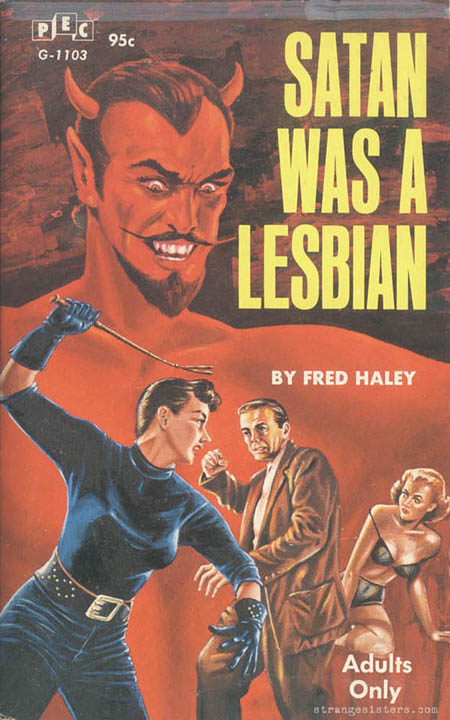
Strange Sisters


An archive of lesbian themed paperback book artwork from the 50s and 60s. Includes gallery, essay about the collection, and links.

Strange Sisters

segunda-feira, 25 de maio de 2009

U.K. Shrinks Reject ’Reparative Therapy’

Most American mental health professionals view the idea that gays and lesbians can be "cured" with skepticism; now, their counterparts in the UK have expressed similar reservations.

An April 27 press release from a Gay and Lesbian Mental Health focus group at the Royal College of Psychiatrists; declares, "The Royal College shares the concern of both the American Psychiatric Association and the American Psychological Association that positions espoused by bodies like the National Association for Research and Therapy of Homosexuality (NARTH) in the United States are not supported by science.

"There is no sound scientific evidence that sexual orientation can be changed," adds the release.

"Furthermore so-called treatments of homosexuality as recommended by NARTH create a setting in which prejudice and discrimination can flourish."

In the United States, so-called "reparative therapy," also known as "conversion therapy," has been decried by professional organizations dedicated to mental health concerns, including the American Psychiatric Association (APA), which struck homosexuality from its listing of mental disorders in 1973.

The release noted that in 1992 The International Classification of Diseases of the World Health Organization also struck homosexuality from its list of pathologies, marking an international consensus that gays and lesbians constitute a natural human sexual variation, rather than being victims of disease or deviance.

However, some religiously based organizations still promote the view that gays and lesbians are "disordered." The Catholic church has barred gays from entering seminaries, declaring that they do not enjoy a healthy ability to relate to persons of both genders.

Some groups, most of them religiously based, also promote the notion that through prayer and psychotherapy, gays and lesbians can "convert" themselves into heterosexuals.

While human sexuality may feature some degree of plasticity, especially in adolescents (who frequently go through a phase of sexual experimentation with, and attraction to, others of the same gender), most mental health professionals view homo- and heterosexuality as innate qualities of individuals.

One way of looking at human sexuality, espoused by the American sex researcher Alfred C. Kinsey, proposes that each individual falls somewhere on a "scale" of sexual orientation, the extremes of which exclude attraction to either the opposite gender or the same gender; in the middle, there is room for some degree of bisexuality.

Indeed, there is some evidence to show that at least some individuals identifying as gay or lesbian might refocus their sexual energies on the opposite sex; what is unclear is whether those individuals were innately, and essentially, gay or lesbian to begin with.

But what alarms GLBT equality advocates are attempts from religious and social conservatives to paint gays and lesbians as having "chosen" their sexuality--an argument that makes even many heterosexuals uncomfortable, because it suggests that straights could also have "chosen" to be gay.

Even so, the argument that sexuality is a choice is used repeatedly in efforts to deny gay and lesbian families and individuals equal access to rights and protections enjoyed by virtually every other demographic, including access to marriage rights.

The release stated, "The Royal College of Psychiatrists holds the view that lesbian, gay and bisexual people should be regarded as valued members of society who have exactly similar rights and responsibilities as all other citizens.

"This includes equal access to health care, the rights and responsibilities involved in a civil partnership, the rights and responsibilities involved in procreating and bringing up children, freedom to practice a religion as a lay person or religious leader, freedom from harassment or discrimination in any sphere and a right to protection from therapies that are potentially damaging, particularly those that purport to change sexual orientation."

Without the backing of scientific evidence to support the view that homosexuality is either a choice or a pathology, some religiously-based groups have launched public relations campaigns designed to suggest, or even claim outright, that gays are deviants who have made deviant choices.

In the United States, The National Organization for Marriage attacked family equality efforts with a widely derided ad in which actors portrayed heterosexual individuals expressing fear over a "storm" in which GLBT individuals would demand equal treatment before the law and--the group claimed--automatically trample the religious freedoms of heterosexuals in the process.

The ad relied on cases in which religious groups and individuals had come into conflict with state anti-discrimination laws and policies.

A six-minute anti-gay ad raised hackles, and drew jeers, in West Virginia and beyond last February for making similar claims, and for depicting a heterosexual couple and their children as being sited with a sniper-scope.

Around the same time, a paid hour-long advertisement called "Silencing the Christians" claimed that gay rights groups were allowed to demand their rights with rallies while similar demonstrations by Christians were targeted by authorities determined to "persecute" people of faith.

Earlier this year, a Michigan TV station declined to air that hour-long anti-gay ad, leading to condemnation from religious conservatives.

In Canada, a similar paid program was yanked from the airwaves after gay and lesbian groups complained to Canadian Television (CTV). The ad was produced by Life Productions , and made the claim that gays and lesbians can "choose" to become heterosexual.

The ad also made the claim that "many homosexuals don’t want to be homosexual."

The commercial featured an "ex-gay" minister, John Westcott, whose Exchange Ministries promises gays that they can be "cured" of their "affliction."

In the commercial, which is half a minute long, Westcott delivers the following speech:

"You hear a lot about gay rights, gay marriage and the gay lifestyle being taught in our public schools for children, but what many people don’t realize, and seldom hear, is that many homosexuals don’t want to be homosexual.

"What many who are struggling with homosexuality don’t realize, and seldom hear, is that they can change.

"I should know--for 13 years, I used to be one."

The ad was scheduled to run for a year, according to a March 10 article at anti-gay religious site LifeSiteNews, but was pulled after three days.

CTV apologized for airing the ad (which was rated as "mature" and slotted to run after 9:00 p.m. by an outside agency), and claimed that its contents were not known to the company’s officials.

Said Sarah Crawford, the Vice President of Public Affairs for CTV, "I assure you that had CTV known the content of the ad, it would not have gone to air."

Following complaints about the ad, Crawford said, "Station personnel then reviewed the ad, deemed it inappropriate for telecast and immediately pulled it off the air," the article reported.

LifeSiteNews.com noted that rival Facebook pages were set up, one decrying the ad’s claims and the other demanding the return of the ad.

The article carried a quote from the head of Life Productions, Jason Johns, who said, "The commercial doesn’t promote hate. It doesn’t promote discrimination. It promotes knowledge, and information."

Johns also denied that gays and lesbians were harmed by the ad, saying, "What we were doing was reaching out to, and educating people that there is a community of people who practice homosexuality that are not interested in practicing homosexuality, in that they want help."

The LifeSiteNews article cited science only to claim that "no scientific evidence" supports the hypothesis that homosexuality is an innate characteristic from birth for some people.

However, homosexuality has been noted well over 1,000 animal species other than human beings, including birds, insects, and other mammals.

And brain scientists have found tantalizing clues that indicate that gay and lesbian brains are physiologically different from those of heterosexuals: in one recent study in Sweden neurologists discovered that the brains of gay men are more like the brains of straight women than of straight men.

Similar results were discovered when the researchers used medical scanning to observe the workings of lesbians’ brains, which operate similarly to those of heterosexual men.

Indeed, the debate over whether physiological differences between gays and straights are authentic--and meaningful--has raged since Dr. Simon LeVay’s 1991 paper "A Difference in Hypothalamic Structure Between Heterosexual and Homosexual Men" was first published in the journal "Science."

The paper documented LeVay’s discovery that, on average, gay men had a smaller cluster of specialized neurons in their hypothalamuses than did heterosexual men.

Subsequent research has offered other indications that brain physiology may indeed account for the deep-seated and spontaneous feelings of same-sex attraction that gays and lesbians experience.

The fact that gays and lesbians exist in similar numbers across all nationalities, ethnicities, and other demographic divides, further indicates that homosexuality is a naturally-occurring and species-wide phenomenon.

However, the question of human sexuality is a large one, and specifics are still hard to pin down. Johns postulated that a population does exist that wish to--and can--alter their deep-seated feelings of sexual attraction for members of their own gender.

Johns condemned the ad’s removal from the airwaves on their behalf, saying, "What about these people who want help, who the commercial was actually for?"

Added Johns, "I’m concerned about our freedom of speech as well."

Johns went on, "If our freedom of speech is jeopardized, if it’s taken away, then who can advocate for these people?

"According to the pro-gay activists, no one is allowed to advocate for them. And I think that that’s where the real dictatorship and discrimination comes in."

Johns fell back on the long-used claim that GLBT equality proponents are largely "intolerant" of dissenting views, saying, "They accuse us of hating, they accuse us of being haters, and discrimination. That’s just not true.

The article claimed that Johns had received threatening email messages.

"We retain the e-mails that they do send us, because that’s evidence of where the real hatred and where the real discrimination exists," said Johns.

While some in the GLBT equality camp would argue that gays and lesbians who are miserable about their sexuality are only unhappy because of the legal and social attacks to which the GLBT community is subjected, Johns sought to reverse that viewpoint, claiming instead that those whose homosexuality makes them unhappy are intimidated by other gays into hesitating to accept a "cure" and to "convert" to heterosexuality.

Claimed Johns, "There’s a lot of fear and a lot of intimidation imposed by the pro-gay community, that I would think that anyone who claims to be homosexual and wants to get help, I think that in that sort of environment they would not feel comfortable voicing their opinion or their concern because of the response that they would get."

The article noted that Life Productions offers no counseling services itself to those wishing to "convert" to heterosexuality, offering referrals instead.

But the effectiveness of such therapies, and even their ethics, are still in question. A Wikipedia entry on the subject listed an array of techniques that have been employed in attempts to "convert" gays, including "behavior modification, aversion therapy, psychoanalysis, primal therapy, Bioenergetics, reparative therapy, hysterectomy, ovariectomy, clitoridectomy, castration, pudic nerve section, lobotomy, hormone treatment, pharmacologic shock treatment, treatment with sexual stimultants and depressants, the reduction of aversion to heterosexuality, electroshock treatment, group therapy, rational emotive therapy, and hypnosis."

The article went on to note that, "Mainstream American medical and scientific organizations have expressed concern over the practice of conversion therapy and consider it potentially harmful."

Not even all "ex-gays" claim to be heterosexual: while some report a satisfying life of heterosexuality after having "left behind" their gay impulses, others report that they continue to "struggle" with their own spontaneous and naturally-occurring emotions regarding members of their own gender, with a form of sexual suppression, or asexuality, being the end result.

What is murky about such reports is whether those who say they have "converted" were ever gay to begin with, or whether they are bisexual, and thus genuinely able to direct their interest toward one gender or the other.

What’s more, the "ex-gay" movement has proven so controversial that there is even a counter-movement of former "ex-gays," or "ex-ex-gays," as it were.

One of the leading opponents of the "ex-gay" movement is Wayne Besen , author and head of the group Truth Wins Out, which counters groups dedicated to the "ex-gay" movement such as Love Won Out , which is affiliated with the anti-gay group Focus on the Family.

U.K. Shrinks Reject ’Reparative Therapy’